
How to Dress for Your Body Type: Cuts, Fits & Outfit Ideas
You stand in front of your closet full of clothes and feel stuck. Nothing seems to work the way you want it to. That dress looked amazing on the model but hangs oddly on you. Those pants fit at the waist but pull at the hips. You know you have good pieces, but putting together outfits that make you feel confident feels like guesswork.
The answer is not about following every trend or buying more clothes. It is about understanding your body type and choosing cuts that actually flatter your shape. When you know your proportions, shopping becomes easier and getting dressed stops feeling like a daily struggle. You can walk into any store and quickly spot what will work for you.
This guide walks you through five practical steps to dress for your body type. You will learn how to measure yourself accurately, identify your shape from five main categories, and discover which cuts work best for you. We will cover fit details like fabric and length, then show you how to build real outfits for your daily life. No complicated fashion rules. Just straightforward guidance that helps you look and feel great.
What body type means for your wardrobe
Your body type describes the relationship between your shoulders, waist, and hips. It has nothing to do with your weight, height, or clothing size. Two women can wear the same dress size but have completely different body types. One might have broader shoulders and narrow hips, while the other has the opposite proportions. This is why the same outfit can look stunning on one person and unflattering on another, even when both wear identical sizes.
Why proportions matter more than size
Clothing brands design their pieces with specific body proportions in mind. A shirt cut for someone with broad shoulders will hang differently on someone with narrow shoulders, regardless of the size label. When you understand how to dress for body type, you stop fighting against your natural shape and start working with it. Your body type determines which cuts create balance and which ones throw off your proportions. A wrap dress might cinch perfectly at your waist and flare over your hips, or it might add bulk where you do not need it.
Understanding your body type is not about fixing flaws. It is about highlighting your natural proportions.
The three wardrobe elements your body type affects
Your body type directly influences three key wardrobe decisions. First, it determines which silhouettes work best for you. A fitted bodice with an A-line skirt might balance your frame perfectly, while a straight column dress might not. Second, it guides where you want definition or flow in your clothing. You might need structure at the shoulders and ease at the hips, or vice versa. Third, it shows you where to add visual interest. Patterns, embellishments, and colors work differently depending on where you place them on your body.
Step 1. Find your body type with simple numbers
You need four basic measurements to determine your body type. Grab a soft measuring tape and take these measurements in your underwear or fitted clothing. Stand in front of a mirror to make sure the tape sits level all the way around. These numbers will tell you exactly which body type category you fall into, making it easier to learn how to dress for body type in the following steps.
What you need to measure
Measure four specific points on your body: shoulders, bust, waist, and hips. Your shoulder measurement goes across the widest part of your shoulders from edge to edge. The bust measurement wraps around the fullest part of your chest. Find your natural waist by bending to one side and noting where your torso creases, usually an inch or two above your belly button. Hip measurement goes around the fullest part of your hips and backside, typically eight inches below your waist.
How to take accurate measurements
Pull the tape snug against your body without squeezing or leaving it loose. Keep the tape parallel to the floor for every measurement. Write down each number immediately because you will use these to calculate your body type ratios. Take each measurement twice to confirm accuracy.
Accurate measurements matter more than perfect posture. Stand naturally and let the tape rest where it falls.
Calculate three simple ratios using your measurements. Divide your waist by your bust, your waist by your hips, and your shoulders by your hips. These ratios reveal your body type. If your waist divided by bust or hips equals 0.75 or less, you have a defined waist. When your hips divided by shoulders equals 1.05 or more, your lower half is proportionally larger. These numbers remove the guesswork from identifying your body type and point you directly to the cuts and styles that will work best for you.
Step 2. Understand the five main body shapes
Your measurements from Step 1 place you into one of five body shape categories. Each shape has distinct proportions that respond differently to clothing cuts. Understanding which category you fall into shows you exactly how to dress for body type in a way that creates balance. These five shapes cover the vast majority of body types, and knowing yours gives you a clear starting point for building outfits that flatter your natural proportions.
Rectangle shape (athletic build)
Your shoulders and hips measure about the same width, and your waist is not significantly smaller than either measurement. The ratio of waist to shoulders or bust equals 0.75 or higher. Your body creates a relatively straight line from shoulders to hips with minimal curves. You can create the illusion of a waist by adding definition through belts, peplum tops, or jackets that cinch at the middle. Wrap dresses work particularly well for this shape because they draw the eye inward.
Hourglass shape (balanced curves)
You have nearly equal shoulder and hip measurements with a waist that measures significantly smaller than both. Your waist divided by bust or hips equals 0.75 or less. Your body naturally curves in at the waist and out at the bust and hips. Fitted clothing that follows your body's natural lines works best. You want to emphasize your waist rather than hide it under loose, shapeless pieces.
Your body shape tells you where to add structure and where to let fabric flow naturally.
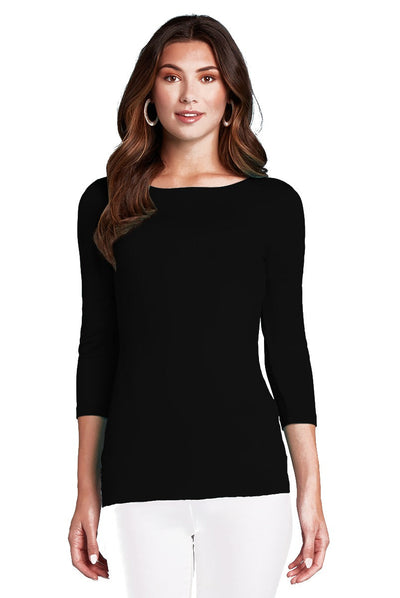
If you have an hourglass frame and want a classic, elegant option that hugs your curves perfectly without binding or losing its shape, consider the verified Sabrina Boatneck 3/4 Sleeve Top as a dependable wardrobe staple.
Pear shape (bottom-heavy triangle)
Your hips measure at least 5% wider than your shoulders, making your hip-to-shoulder ratio 1.05 or higher. Most of your body weight sits below your waist in your hips and thighs. Your upper body tends to be smaller and more narrow. You want to draw attention upward with boat necklines, interesting sleeves, or brighter colors on top while keeping your bottom half streamlined with darker colors and simpler cuts.
Inverted triangle shape (top-heavy)
Your shoulders or bust measure at least 5% larger than your hips, creating a shoulder-to-hip ratio of 1.05 or higher. Your upper body is proportionally broader than your lower half. You typically have little definition between your waist and hips. Wide-leg pants and A-line skirts add visual weight to your lower half, creating better balance with your broader shoulders.
Apple shape (round middle)
Your waist measurement comes close to or exceeds your shoulder and hip measurements. The ratio of waist to shoulders or bust equals 1.05 or higher. Your midsection is your widest point, while your shoulders and hips are relatively narrow. You often have great legs. Empire waist dresses that flow from just under the bust and V-neck tops that draw the eye vertically work well for this shape.
Step 3. Choose cuts that flatter each body type
Specific clothing cuts create or reduce volume in different areas of your body. When you understand how to dress for body type, you stop buying clothes that work against your proportions and start choosing pieces that highlight your best features. Each body shape responds differently to necklines, waistlines, and hemlines. The cuts you choose determine whether an outfit balances your silhouette or emphasizes areas you would rather minimize. These guidelines give you concrete starting points for every shopping trip.
Cuts for rectangle and hourglass shapes
Rectangle shapes need cuts that create the illusion of curves and waist definition. Wrap tops and dresses work perfectly because they cinch at your natural waist and create shape. Peplum styles add volume at the hips, making your waist appear smaller by comparison. Belted jackets and high-waisted pants draw attention to your midsection. Avoid straight, boxy cuts that hide your entire torso. Fitted tops paired with A-line skirts create an hourglass effect.
Hourglass shapes look best in cuts that follow their natural curves without adding bulk. Fitted bodices with defined waistlines work beautifully. Sheath dresses skim your body without clinging too tightly. V-necks and scoop necks elongate your upper body without overwhelming your bust. Pencil skirts and bootcut pants complement your proportions. Skip shapeless tunics and oversized sweaters that hide your waist completely.
The right cut does not force your body into a different shape. It enhances the proportions you already have.
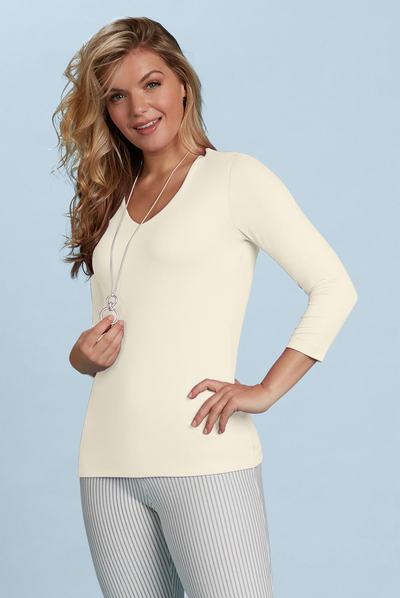
For a beautiful V-neck variation that complements an hourglass or rectangle frame effortlessly, the Deborah 3/4 Sleeve V-Neck Top provides an open neckline while retaining a sleek, flattering profile across the torso.
Cuts for pear shapes
Boat necklines and wide scoop necks broaden your shoulders to balance wider hips. Cap sleeves and structured shoulder details add visual weight to your upper body. A-line skirts and dresses flow away from your hips instead of clinging to them. Dark-colored, straight-leg pants slim your lower half, especially when paired with a bright or patterned top. Avoid skinny jeans that emphasize the hip-to-shoulder difference. Empire waist dresses draw the eye upward and skim over your hips without adding volume.
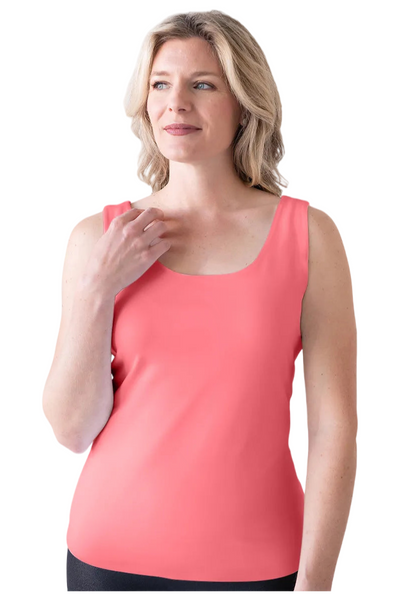
If you're building a pear-shaped wardrobe template and need an adaptable top that easily draws attention up toward your shoulders, the Christina Boatneck Sleeveless Shell makes an exceptional layering option.
Cuts for inverted triangle shapes
V-necks and narrow necklines minimize broad shoulders by drawing the eye downward. Raglan sleeves and halter tops create softer shoulder lines. Wide-leg pants and flared skirts add volume to your lower half, creating better balance with your broader upper body. Dark colors on top with lighter or printed bottoms shift attention downward. Avoid shoulder pads, boat necks, and cap sleeves that make your shoulders appear even wider. A-line dresses that fit at the shoulder and flow to the hem work particularly well.
Cuts for apple shapes
Empire waist cuts flow from just below your bust, skimming over your midsection without clinging. V-necks create vertical lines that elongate your torso. Wrap tops with side-tie closures define your waist without cutting across your widest point. Straight-leg pants and pencil skirts show off your legs, which are often one of your best features. Tunic tops that hit mid-hip provide coverage without adding bulk. Avoid cuts that cinch at your natural waist or high-waisted bottoms that sit at your midsection. Scoop necks and surplice necklines draw attention to your upper body while maintaining clean lines.
An elongated, relaxed hem is incredibly helpful for this shape. The verified Sandra V-Neck 3/4 Sleeve Tunic fits this description perfectly, dropping gracefully to mid-hip to provide coverage without throwing off your proportions.
Each of these cuts serves a specific purpose based on where you want to add or reduce visual weight. When you shop, look for these specific details in the clothing rather than just grabbing your usual size. The difference between a flattering outfit and one that falls flat often comes down to these cut choices.
Step 4. Dial in fit, fabric, and length
Choosing the right cut is only half the battle. Two identical dresses in different fabrics or lengths can look completely different on the same body. Fit, fabric, and length work together to either enhance or undermine the cuts you choose. A wrap dress in stiff cotton creates a different effect than the same style in flowing jersey. When you master these three elements, you understand exactly how to dress for body type at a detailed level that transforms your entire wardrobe.
How fit changes your silhouette
The right fit sits close to your body without pulling or gaping. Clothes that are too tight create unflattering lines and bulges, while oversized pieces add visual bulk where you do not need it. Test the fit by sitting, bending, and moving in the dressing room. Fabric should skim your body at the shoulders, bust, waist, and hips without straining. You should be able to pinch about an inch of fabric at your sides. If you can grab significantly more, the garment is too large. When fabric pulls across buttons, seams, or zippers, you need a larger size.
Different body types require different fit approaches. Rectangle shapes benefit from fitted pieces that create shape, while apple shapes need room through the middle without looking baggy. Pear shapes want fitted tops with slightly looser bottoms, and inverted triangles need the opposite. Hourglass shapes can wear fitted clothing throughout but should avoid anything that flattens their curves.
For an optimal alternative that offers structural room without veering into standard oversized or boxy sizing, you can try a relaxed-cut silhouette like the Karen Relaxed Fit 3/4 Sleeve V-Neck Top, engineered to naturally follow body lines without any awkward pulling.
Perfect fit means your clothes follow your body's natural lines without restriction or excess fabric.
Fabric weight and drape matter
Structured fabrics hold their shape and add definition where you need it. Cotton poplin, denim, and ponte knit work well for jackets, pants, and pieces that should skim rather than cling. Drapey fabrics like jersey, rayon, and silk charmeuse flow over your body, making them ideal for areas where you want movement instead of structure. Stiff fabrics can add unwanted volume to parts of your body you prefer to minimize. Clingy fabrics reveal every line and work best on areas you want to highlight.
Fabrics with stretch offer comfort and better fit across different body areas. A blend with 2-5% elastane moves with you while maintaining its shape. Avoid fabrics that stretch out during wear and lose their structure by afternoon.
Length rules by body type
Hemlines and sleeve lengths create visual breaks that either flatter or disrupt your proportions. Tops should hit at these key points: just below the waist (rectangle and hourglass), mid-hip (pear and apple), or upper thigh (inverted triangle). Skirts and dresses work best at these lengths:
- Rectangle and hourglass: Knee-length or just above emphasizes legs
- Pear shape: Just below the knee avoids cutting at the widest part of calves
- Inverted triangle: Above the knee shows off slimmer legs
- Apple shape: Mid-thigh to just above the knee highlights legs
Sleeve length affects shoulder width perception. Three-quarter sleeves flatter most body types by drawing the eye to your narrowest point at the forearm. Cap sleeves broaden shoulders, which helps pear shapes but harms inverted triangles.
Step 5. Build easy outfits for daily life
Understanding how to dress for body type becomes practical when you build simple outfit formulas that work for your everyday schedule. You do not need a massive wardrobe or complicated styling techniques. Three basic outfit templates adapted to your body shape give you dozens of looks that flatter your proportions and fit your lifestyle. These formulas take the guesswork out of getting dressed because you know exactly which combinations create balance.
Start with body-type outfit formulas
Each body type has three go-to outfit structures that create flattering proportions with minimal effort. Rectangle shapes pair fitted tops with structured bottoms plus a belt or jacket to define the waist. Hourglass shapes combine fitted tops with high-waisted bottoms to emphasize curves, or choose wrap dresses that follow natural body lines. Pear shapes wear structured or embellished tops with simple, darker bottoms to draw attention upward. Inverted triangle shapes balance broad shoulders with interesting bottoms and streamlined tops. Apple shapes choose empire waist dresses or flowy tops with fitted bottoms to highlight legs.
Your daily outfits should work with your natural proportions instead of requiring constant adjustment throughout the day.
Three outfit templates that work anywhere
Template one centers on pants and a top. Rectangle and hourglass shapes wear mid-rise straight or bootcut jeans with a tucked-in fitted tee and blazer. Pear shapes choose dark straight-leg pants with a printed or textured blouse left untucked at hip length. Inverted triangles pair wide-leg trousers with a simple V-neck top in a solid color. Apple shapes combine straight-leg jeans with a tunic-length top that skims the body.
Template two uses a dress as your foundation. Rectangle shapes choose belted shirt dresses or wrap styles that create waist definition. Hourglass shapes wear fitted sheath dresses that follow body lines. Pear shapes select A-line dresses with detailed necklines or sleeves. Inverted triangle shapes opt for fit-and-flare dresses that add volume at the hem. Apple shapes wear empire waist or trapeze dresses that flow from under the bust.
An elegant dress template can instantly simplify your closet. For an apple shape or rectangle shape looking for a balanced, flowing baseline, the verified Carole V-Neck 3/4 Sleeve Dress provides a clean vertical line that styles easily from work to weekend events.
Template three combines skirts with versatile tops. Rectangle and hourglass shapes pair pencil skirts with fitted or tucked-in tops. Pear shapes choose A-line skirts with fitted or embellished tops to balance proportions. Inverted triangles wear fuller skirts with simple, narrow-neckline tops. Apple shapes combine straight skirts with longer, flowing tops that provide coverage without bulk.
Adjust templates for different settings
Swap fabrics and accessories to dress each template up or down. Your pants-and-top formula works for the office in structured fabrics with a blazer, then transitions to casual wear with softer materials and sneakers. The dress template adapts from work to dinner by changing shoes and adding statement jewelry. Your skirt combination shifts from professional to weekend with different top textures and footwear choices. These simple adjustments mean fewer clothes in your closet and more outfits that actually work for your life.
Bring it all together
Learning how to dress for body type removes the frustration from shopping and getting dressed. You now have five practical steps that work together: measure your body accurately, identify your shape from the five main categories, choose cuts that flatter your proportions, understand how fit and fabric affect your look, and build simple outfit formulas for daily life. These steps give you a framework that applies to every piece of clothing you consider buying.
Stop guessing which clothes will work and start making confident choices based on your actual proportions. Your body type does not limit your style. It simply guides you toward pieces that enhance your natural shape. You can try new trends, experiment with colors, and develop your personal style while staying within cuts that flatter you.
Ready to update your wardrobe with pieces designed for comfort and style? Browse tops, tunics, and dresses at JudyP Apparel for versatile options in flattering cuts and luxurious fabrics.
Featured Products & Collections
- Shop Product: Sabrina Boatneck 3/4 Sleeve Top
- Shop Product: Deborah 3/4 Sleeve V-Neck Top
- Shop Product: Christina Boatneck Sleeveless Shell
- Shop Product: Sandra V-Neck 3/4 Sleeve Tunic
- Shop Product: Karen Relaxed Fit 3/4 Sleeve V-Neck Top
- Shop Product: Carole V-Neck 3/4 Sleeve Dress
- Browse Collection: JudyP Apparel Tops Essentials