
Few brands have burned as bright, or crashed as hard, as American Apparel. The American Apparel story is one of massive ambition, cultural influence, workplace scandal, and financial ruin, all packed into roughly two decades. Founded by Dov Charney in the 1990s, the company built its identity on domestically manufactured basics and provocative advertising that made it impossible to ignore.
At its peak, American Apparel operated hundreds of stores worldwide and employed thousands of garment workers in downtown Los Angeles. But behind the neon spandex and controversial ad campaigns, serious problems were festering. Allegations of misconduct, mismanagement, and a toxic workplace culture eventually caught up with the brand. Netflix's Trainwreck: Woodstock '99 series-adjacent docuseries brought renewed attention to the company's unraveling, introducing the saga to a new generation of viewers.
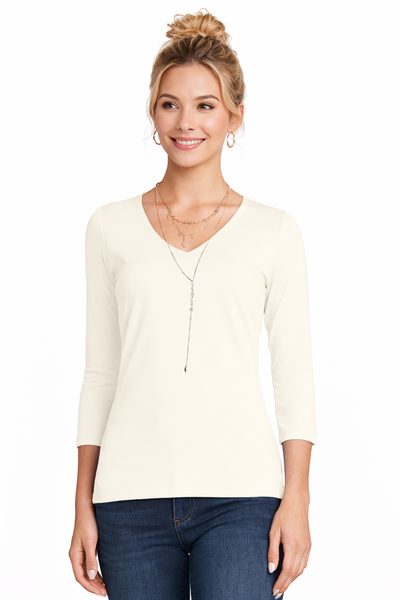
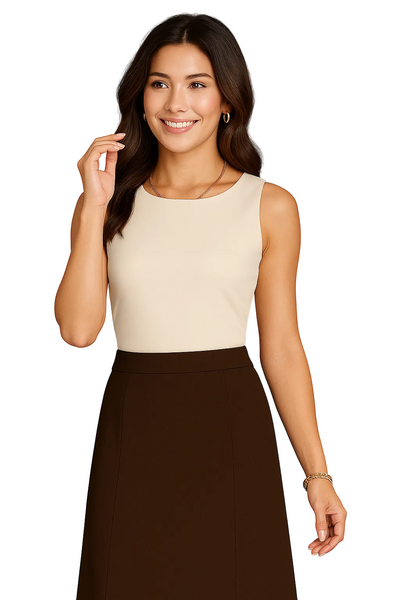
As a women's clothing brand that proudly manufactures in the USA, we at JudyP Apparel have watched this story with particular interest. American Apparel proved there was real demand for American-made garments, but it also showed what happens when a company loses sight of its responsibility to the people who make and wear its clothes. Our own commitment to quality Tencel fabrics, ethical production, and clothing that genuinely serves women stands in sharp contrast to the chaos that defined American Apparel's final years.
This article covers the full arc: the founding, the meteoric rise, the scandals, the bankruptcy, and what the brand's collapse means for American fashion today.
Why American Apparel became a cultural phenomenon
American Apparel did not become a cultural touchstone by accident. Dov Charney launched the brand in 1989 out of Montreal before moving operations to Los Angeles, and from the start, the company positioned itself differently from every other clothing retailer in the market. It sold basics with a strong point of view: fitted t-shirts, hoodies, leggings, and bodysuits in saturated colors, all manufactured without outsourcing. That combination of simplicity and clear identity caught the attention of a generation growing skeptical of fast fashion and the offshoring of American jobs.
The timing and the cultural moment
The early 2000s gave American Apparel exactly the right stage. Fast fashion was accelerating, with brands like H&M and Zara expanding rapidly across the US, and consumers were starting to feel the backlash against disposable, cheaply made clothing. American Apparel stepped in as a credible alternative: a company that talked openly about fair wages and domestic manufacturing at a time when most clothing brands were moving production overseas without comment.
American Apparel made "Made in USA" feel like a fashion statement, not just a label on a tag.
Indie music culture, urban street style, and the rise of fashion blogs all gave the brand free amplification during this period. You could walk into a show at a small venue in Brooklyn or a gallery opening in Silver Lake and find half the room wearing American-made basics layered in ways the brand itself encouraged through its catalogs and in-store displays.
The product line that filled a real gap
American Apparel's core product range was deceptively straightforward. The company focused on garments that worked as wardrobe building blocks: plain tees, zip-up hoodies, athletic shorts, and jersey dresses in dozens of solid colors. These were not statement pieces on their own, but they became the foundation of countless outfits for people who valued clean, uncluttered dressing.
Fit was central to the brand's appeal. The cuts were slim and close to the body, which felt different from the baggy silhouettes that had dominated the 1990s. For a specific demographic, especially young women and men in their 20s living in cities, American Apparel clothing fit the way they actually wanted to dress. The brand understood body-conscious styling before most mainstream retailers caught up to it.
Why the "Made in USA" message resonated
Understanding the full American Apparel story requires taking its manufacturing message seriously. At a point in American retail history when almost no clothing was still made domestically at scale, American Apparel ran its own vertically integrated facility in downtown Los Angeles. The company employed thousands of workers directly, paid above minimum wage, and offered benefits, facts the brand publicized aggressively across all its marketing channels.
For consumers who cared about labor practices, this was genuinely meaningful. Buying a t-shirt meant, at least in the brand's framing, supporting American workers and rejecting exploitative overseas supply chains. Whether the full reality matched the marketing is a more complicated question, but the message resonated deeply with an influential consumer segment that shaped trends and drove word-of-mouth growth throughout the mid-2000s. That authenticity, real or perceived, is what pushed American Apparel from a clothing company into a cultural reference point.
How American Apparel built its brand and business
American Apparel's business model was built on vertical integration, which meant the company controlled nearly every step of production under one roof. Its downtown Los Angeles factory handled cutting, sewing, dyeing, and finishing in-house, giving the brand speed and quality control that outsourced competitors could not easily match. This setup also became the foundation for the marketing narrative that drove early growth.
Retail expansion and store design
The company opened its first retail store in Montreal in 2003 before expanding aggressively across North American cities and eventually into Europe, Asia, and Australia. At its peak, American Apparel operated over 260 stores worldwide, a number that reflected both the strength of its brand identity and the ambition of its leadership. Each store was deliberately designed to feel consistent: bright lighting, clean white walls, and clothing displayed in ways that emphasized fit and color.
You could walk into any American Apparel location and immediately recognize the aesthetic. Minimal signage and consistent visual merchandising created a uniform shopping experience that reinforced the brand identity across every market. The stores functioned as physical extensions of the advertising, making the whole operation feel cohesive in a way that many fast fashion competitors never achieved.
Pricing and positioning
American Apparel priced its products above fast fashion but below premium brands, which placed it in a sweet spot for cost-conscious young consumers who still wanted quality. A basic t-shirt retailed for around $20 to $28 at a time when H&M offered similar styles for under $10. That price premium required constant justification, and the brand delivered it through its manufacturing story, its product quality, and the cultural cachet it had built through advertising and community presence.
The American Apparel story is, in part, a case study in how a clear brand position can carry a significant price premium for years, right up until it can't.
The company also benefited from wholesale and custom printing revenue, selling blank garments to businesses, screen printers, and organizations that needed quality blanks. This segment provided a reliable revenue stream outside of retail and helped the business scale its manufacturing operations during periods when retail growth alone might not have justified the investment.
The ads, controversies, and workplace culture
American Apparel's advertising was inseparable from its identity, and understanding the full American Apparel story means looking directly at both the strategy and the damage it caused. The brand ran self-produced photo campaigns that featured non-professional models, often employees, in sexually explicit poses that pushed far past the boundaries of mainstream retail advertising. These campaigns appeared in print, online, and plastered across billboards in major cities, making them hard to miss regardless of whether you sought them out.
The advertising strategy that divided audiences
American Apparel's ads generated enormous attention by design. Dov Charney directed many of the campaigns himself and made provocative imagery a core pillar of the brand's identity rather than an accidental byproduct of edginess. For a segment of the market, the rawness felt authentic, even feminist in its rejection of polished, airbrushed photography. For another, much larger segment, the images looked exploitative and gratuitous, particularly as reports about internal workplace conditions began to surface.
The ads bought attention for the brand, but they also created a permission structure for behavior that should never have been tolerated inside the company.
Regulatory bodies in the UK and Canada repeatedly pulled specific ads for violating decency standards. Several campaigns were banned outright after formal complaints, which generated additional press coverage that the brand appeared to welcome. Controversy became a deliberate tool, at least for a while.
Workplace misconduct and what it cost
The advertising culture reflected something much darker inside the company. Multiple women filed lawsuits and formal complaints against Dov Charney over a period spanning more than a decade, alleging sexual harassment, assault, and hostile working conditions. The company's board took years to act, and when it finally terminated Charney in 2014, the damage to employee trust and brand reputation had already accumulated well beyond repair.
Former employees described a workplace where boundaries were routinely ignored and complaints were either dismissed or met with retaliation. These accounts painted a picture of a company where the founder's behavior set the tone at every level, from how advertising was shot to how management treated staff. If you tracked the American Apparel story closely, the misconduct was not a surprise. The signs had been visible in the advertising and in court filings for years before the board finally moved.
The financial unraveling and two bankruptcies
American Apparel's collapse did not happen overnight. The company accumulated debt steadily from years of aggressive retail expansion and operational costs that the business could not sustain once sales began to soften. By the mid-2010s, the brand was carrying hundreds of millions in debt while losing market share to fast fashion competitors and struggling to retain the cultural relevance that had once driven its growth.
How debt and declining sales collided
The financial problems ran deeper than a single bad year. Rising production costs in the Los Angeles factory made it difficult to compete on price, and the controversy surrounding Dov Charney had started to push consumers away. The brand that once felt like a statement about ethical production had become associated with misconduct and dysfunction, and that shift in public perception translated directly into declining retail traffic and lower sales volumes.
Charney's removal in 2014 created additional instability. The leadership transition was chaotic, and the company struggled to maintain consistent operations or execute a credible turnaround plan. Investors and lenders lost confidence, which tightened access to the capital the brand needed to stabilize its operations and fund any realistic recovery.
The first bankruptcy filing in 2015
American Apparel filed for Chapter 11 bankruptcy protection in October 2015, listing approximately $300 million in debt against assets that could not cover it. The filing was structured as a reorganization rather than a liquidation, and the company emerged from the process with new equity holders and a restructured balance sheet. At that point, the plan looked like it might give the brand a genuine path forward.
If you follow the American Apparel story closely, the first bankruptcy looks less like a turning point and more like a delay of the inevitable.
The second collapse in 2016
The restructured company did not recover. Sales continued to fall throughout 2016, and the cost structure remained too heavy for the revenue the brand was actually generating. American Apparel filed for bankruptcy a second time in November 2016, and this filing carried a different outcome. There was no reorganization plan on the table; the company moved toward full liquidation instead.
All retail stores closed by the end of 2016, putting thousands of employees out of work. The factory in Los Angeles, which had been the physical and symbolic center of everything the brand claimed to stand for, shut down operations shortly after. A business built on the promise of American manufacturing ended with none of it left.
The Gildan takeover and what exists today
When American Apparel's second bankruptcy ended in liquidation, the brand's intellectual property did not disappear. Canadian clothing manufacturer Gildan Activewear stepped in and acquired the American Apparel brand name, trademarks, and related assets in early 2017 for approximately $88 million. Gildan had no interest in reopening retail stores or reviving the Los Angeles factory. What the company wanted was the brand name and its recognition among consumers who still associated it with quality basics.
What Gildan bought and what it left behind
Gildan's acquisition covered brand assets and intellectual property, not the physical infrastructure that had defined American Apparel's identity. The downtown Los Angeles factory, the retail stores, and the vertically integrated manufacturing operation that formed the entire basis of the brand's ethical manufacturing story were all gone before Gildan got involved. What remained was a recognizable name that Gildan could attach to its existing production pipeline, which runs through factories in Central America and other lower-cost regions, the exact opposite of what American Apparel originally stood for.
The final chapter of the American Apparel story is, in many ways, a complete reversal of everything the brand claimed to represent.
For the workers who had built careers at the Los Angeles facility, the Gildan acquisition offered nothing. Thousands of employees lost their jobs when the factory closed, and no part of the transition involved bringing any of that workforce forward.
What American Apparel looks like today
If you visit the current American Apparel website, you will find a functioning online store selling basics under the familiar name. The product range includes t-shirts, hoodies, and other styles that overlap visually with what the original brand sold. However, the "Made in USA" positioning is gone, replaced by standard offshore production that makes the current iteration functionally indistinguishable from dozens of other basic apparel brands.
Some consumers still buy from the relaunched brand, largely because name recognition carries weight even after the original business behind the name has collapsed. For buyers who grew up with the brand in the 2000s, the label still triggers familiarity. For anyone who followed the original brand closely, though, the current version shares little more than a logo with what existed before. The company that built its identity on domestic manufacturing and a specific cultural moment no longer exists in any meaningful sense.
How Trainwreck frames the story and what to know
Netflix's Trainwreck docuseries brought the American Apparel story back into public conversation for viewers who either lived through it or were too young to follow it in real time. The series takes a broader look at cultural implosions of the late 1990s and early 2000s, and the American Apparel episode fits that framing well. It presents the brand's collapse as a case study in what happens when one person's unchecked power shapes every aspect of a company from its advertising to its internal culture.
What the Netflix series actually covers
The documentary focuses heavily on Dov Charney's behavior and the accounts of former employees who describe working conditions that ranged from uncomfortable to genuinely harmful. It draws on interviews with people who were close to the brand during its peak years and its unraveling, giving the narrative a personal dimension that goes beyond financial reporting or legal filings alone. If you have not followed the story before, the series works as a solid introduction to the key events and the people involved.
The series also pays attention to how the advertising and workplace culture reinforced each other, which is one of the more important threads in the full story. The provocative campaigns were not separate from the internal dysfunction; they reflected it. That connection is something the documentary makes reasonably clear, and it helps explain why the misconduct allegations came as a surprise to almost no one who had been paying attention.
If you want to understand the full arc, the series is a useful starting point, but it covers selected highlights rather than the complete picture.
What the documentary gets right and where it's limited
The Trainwreck format is built around dramatic storytelling, which means it emphasizes the most striking moments and sometimes moves quickly past the structural and financial factors that contributed just as much to the company's collapse. You will get a clear picture of the misconduct and the personalities involved, but less detail about the debt accumulation, the manufacturing economics, and the strategic missteps that made recovery impossible even after Charney was removed. The full story requires looking beyond the documentary to understand how the business itself fell apart at every level, not just at the top.
For most viewers, the series does what it sets out to do: it captures the chaos and holds the key figures accountable in a public format that a financial filing never could.
What American Apparel's story means now
The American Apparel story is ultimately a lesson in how a strong idea can fall apart when the people running it prioritize personal behavior over the business and the workers who made it possible. American manufacturing, fair wages, and quality product were real things that consumers genuinely valued, and the demand for them did not disappear when American Apparel collapsed. It simply went elsewhere.
If you are shopping for American-made women's clothing that actually delivers on what American Apparel once promised, that option still exists. At JudyP Apparel, every garment is made in the USA from exclusive Tencel fabric, designed to fit well, and built to last without requiring a visit to an ironing board. The values that drew people to American Apparel in the first place are still worth seeking out. You just need to find them in a brand that has never lost sight of them.